Meta2026-09-21 00:02:08WebArena creator Shuyan Zhou joins Meta’s Superintelligence Labs to work on an AI browserShuyan Zhou, a Harbin Institute of Technology alumna and one of the key figures behind WebArena, said she left academia earlier this year and joined Meta’s “AI dream team,” the company’s Superintelligence Labs. She said her main focus at Meta is building an AI browser, a line of work that matches the research direction she has pursued for years: teaching AI agents to operate in real digital environments and complete tasks on behalf of users. Zhou studied computer science at the University of Hong Kong, then entered Carnegie Mellon University’s Language Technologies Institute in 2018 and completed her PhD in 2024. The source article says her Google Scholar citations have reached 9,569, with an h-index of 25. Her work includes WebArena, which created a realistic web environment for autonomous agents, VisualWebArena, which added visual understanding tasks, and OSWorld, which expanded evaluation from browsers to full computer systems. The report also places her move in the context of Meta’s Superintelligence Labs, or MSL, formed in June 2025 as part of a broader AI reorganization. Meta has tied the unit to its push for “personal superintelligence,” and the article notes that the lab has already released Muse Spark and the personal agent Muse.590
Mozilla2026-08-18 22:32:27Mozilla Tests an Opt-In AI ‘Smart Window’ in FirefoxMozilla is testing a new “Smart Window” in Firefox, a separate optional space where users can chat with an AI assistant of their choice while browsing. The feature is being offered through a waitlist and stays off by default. Mozilla says users can decide when, how, or whether to use AI at all, and can turn it off if they do not want it. The company frames the project as user-controlled and says it is building in the open, with feedback from early testers. The Smart Window sits alongside Firefox’s Classic and Private modes, and Mozilla says it is meant to avoid the lock-in it associates with browsers made by AI companies. The feature also extends existing AI tools in Firefox, including the desktop sidebar chatbot and Shake to Summarize on iOS. Mozilla says AI should be “open, accessible, and driven by choice.”570
OpenAI2026-08-10 03:03:21OpenAI shutters Atlas as the stand-alone AI browser thesis runs into a wallOpenAI has shut down Atlas, the AI browser it launched with fanfare in October 2025, ending the product in less than 10 months. Atlas never expanded beyond macOS, and the promised Windows, iOS and Android versions were never released. Users also need to export bookmarks, tabs, browsing history and saved passwords manually before service ends, because that data will not move automatically. According to OpenAI, Atlas’s core AI capabilities will be folded into the ChatGPT desktop app, Chrome extensions and Codex. The article argues that Atlas’s collapse says more about the category than about a single product. Its core pitch was to turn browsing into a conversation by embedding ChatGPT directly into the browser and letting an agent read pages, click, fill forms, compare prices and place orders. But that required users to switch browsers, a high-friction move in a market where Chrome holds roughly 65% to 70% share and where bookmarks, password managers, extensions, work accounts and enterprise SSO are already tied to existing setups. The piece also points to prompt injection as a persistent security issue and says the industry is converging on a different model: not replacing Chrome, but layering AI on top of it or outside it. Google is integrating Gemini into Chrome, Anthropic is using a Chrome extension and pushing Computer Use, and OpenAI is now pulling Atlas capabilities back into ChatGPT Work and extensions instead of keeping a separate browser alive.2050
OpenAI2026-08-09 04:32:53OpenAI’s AI-native browser Atlas shuts down on Aug. 9, 292 days after launchOpenAI’s AI-native browser Atlas has shut down on Aug. 9, 2026, 292 days after its release, according to an Odaily report citing GeekPark. The update places Atlas among a group of AI browser products that have either stalled or exited the market. In the same period, media statistics showed that Chrome still held two-thirds of global market share, underscoring the dominance of established browsers even as new AI-focused products tried to gain traction. The report also listed several other developments in the category: Arc has stopped receiving updates, Sidekick has been shut down, and The Browser Company was acquired by Atlassian. Atlas’s final user-facing instruction, as left in OpenAI’s help documentation, was a practical one rather than a product message: users were told to export their bookmarks as an HTML file before Aug. 9. No image was provided with the source brief, and no additional operating details were disclosed in the item.1940
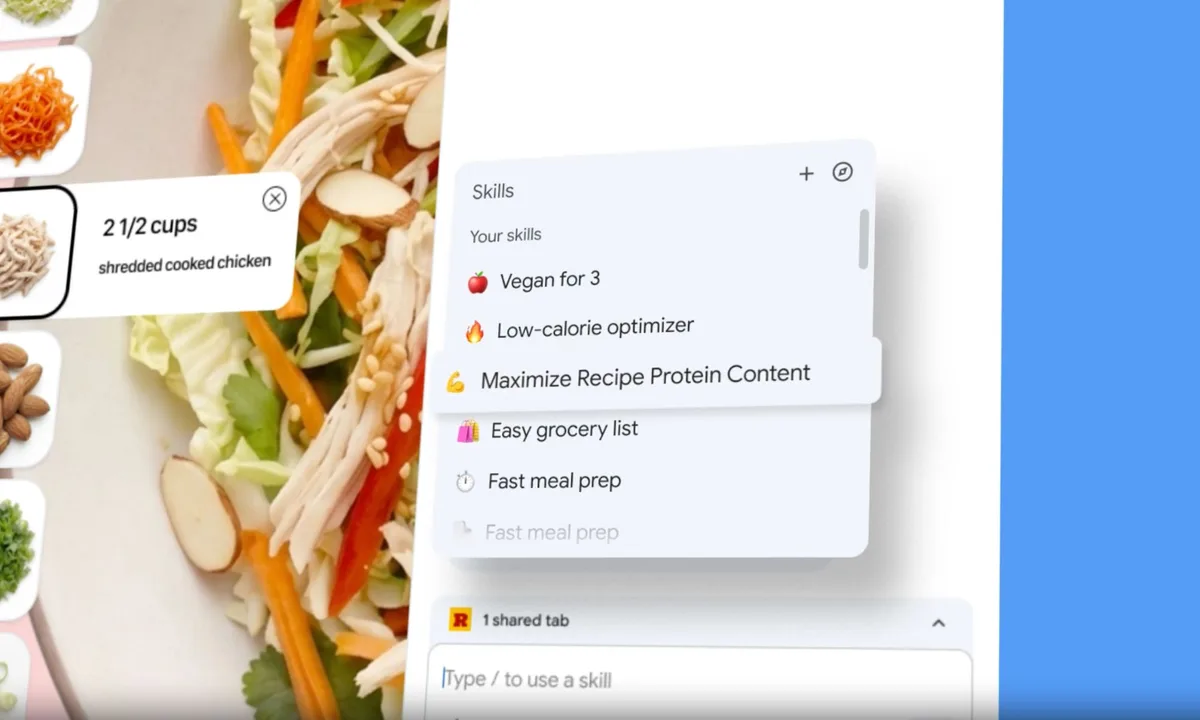
Google2026-07-23 22:35:15Google Launches Chrome Skills for One-Click Gemini Prompts Across TabsGoogle has rolled out Chrome Skills, letting users save Gemini prompts as reusable one-click tools that can run on the current page or across multiple tabs. The feature is currently limited to desktop Chrome users with English (US) settings.540
OpenAI2026-07-10 11:13:13OpenAI Prepares Desktop Super App Combining ChatGPT, Codex and BrowserThe Wall Street Journal reports that OpenAI is preparing a desktop “super app” that would combine ChatGPT, Codex and browser functions into one platform, aiming to streamline AI chat, coding assistance and web navigation in a unified experience.500